Role
Product Designer, embedded squads
For a Fortune 500 HR-tech company, one of the largest payroll & HCM providers in the U.S., where I worked across compliance flows, interactive documents, internal tooling and a conversational AI layer.
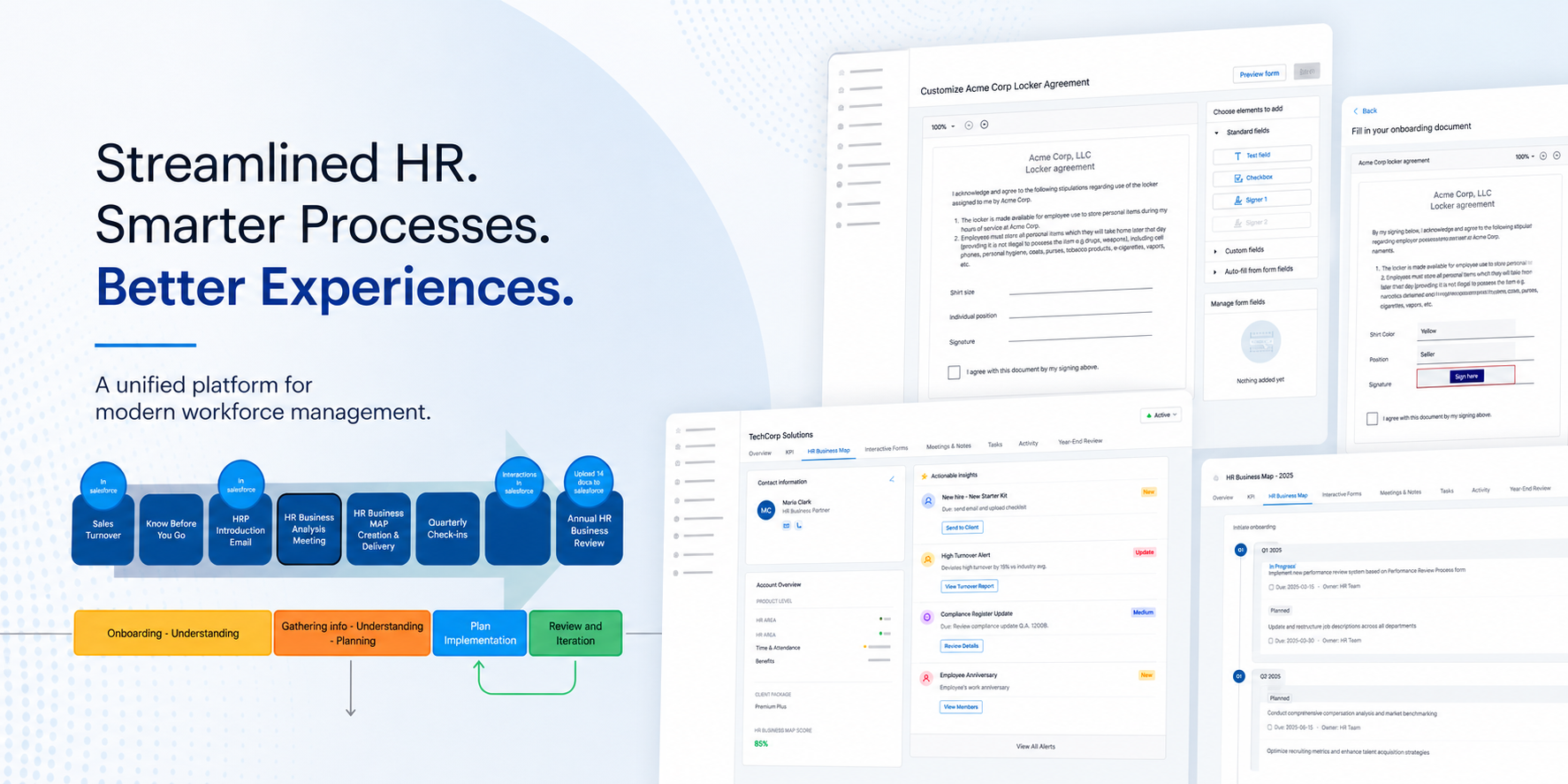
Embedded in cross-functional squads, the work focused on the HR & Compliance domain of a large-scale HCM (Human Capital Management) platform, a cloud-based SaaS used by employers and employees for payroll, HR management, benefits and regulatory compliance across the U.S.
It covered multiple concurrent initiatives: improving compliance flows and document interaction, building internal tooling for service teams, and designing AI-powered conversational agents.
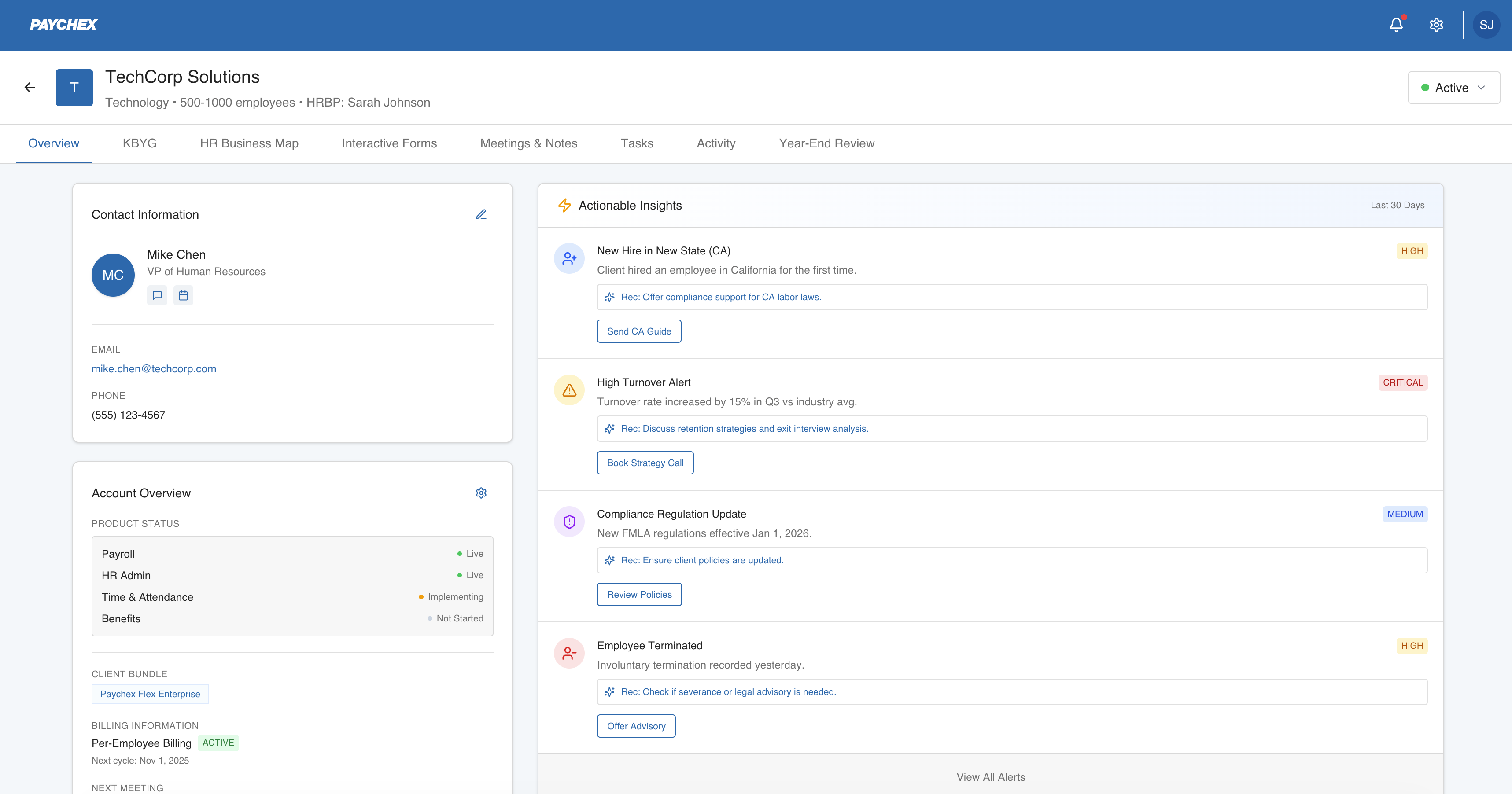
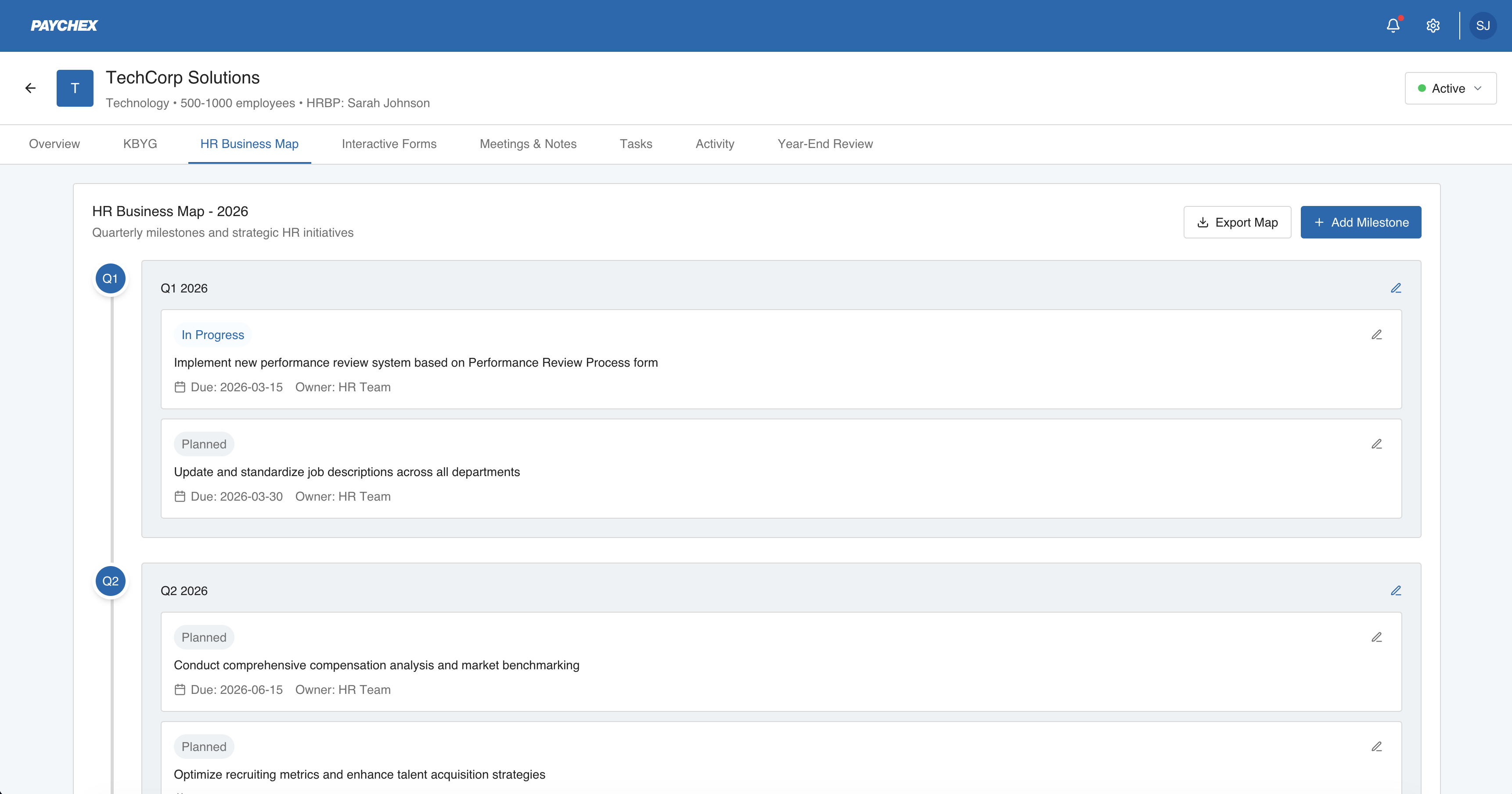
Understanding the service layer was key. I ran in-depth discovery with HR Business Partners (HRBPs), internal reps who bridge the platform and clients, to map their daily workflows and uncover opportunities.
HRBPs serve many clients at once, with information scattered across platforms. Navigating up to 15 different systems to find the right data turned a simple lookup into a slow, repetitive manual task.
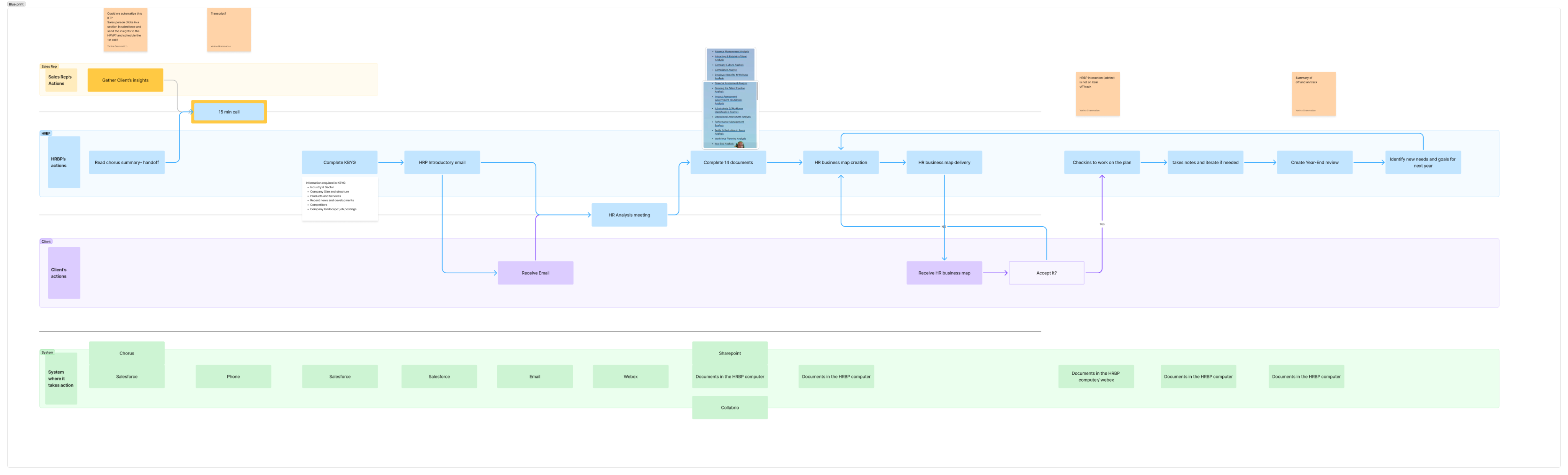 Scroll to pan · click to enlarge
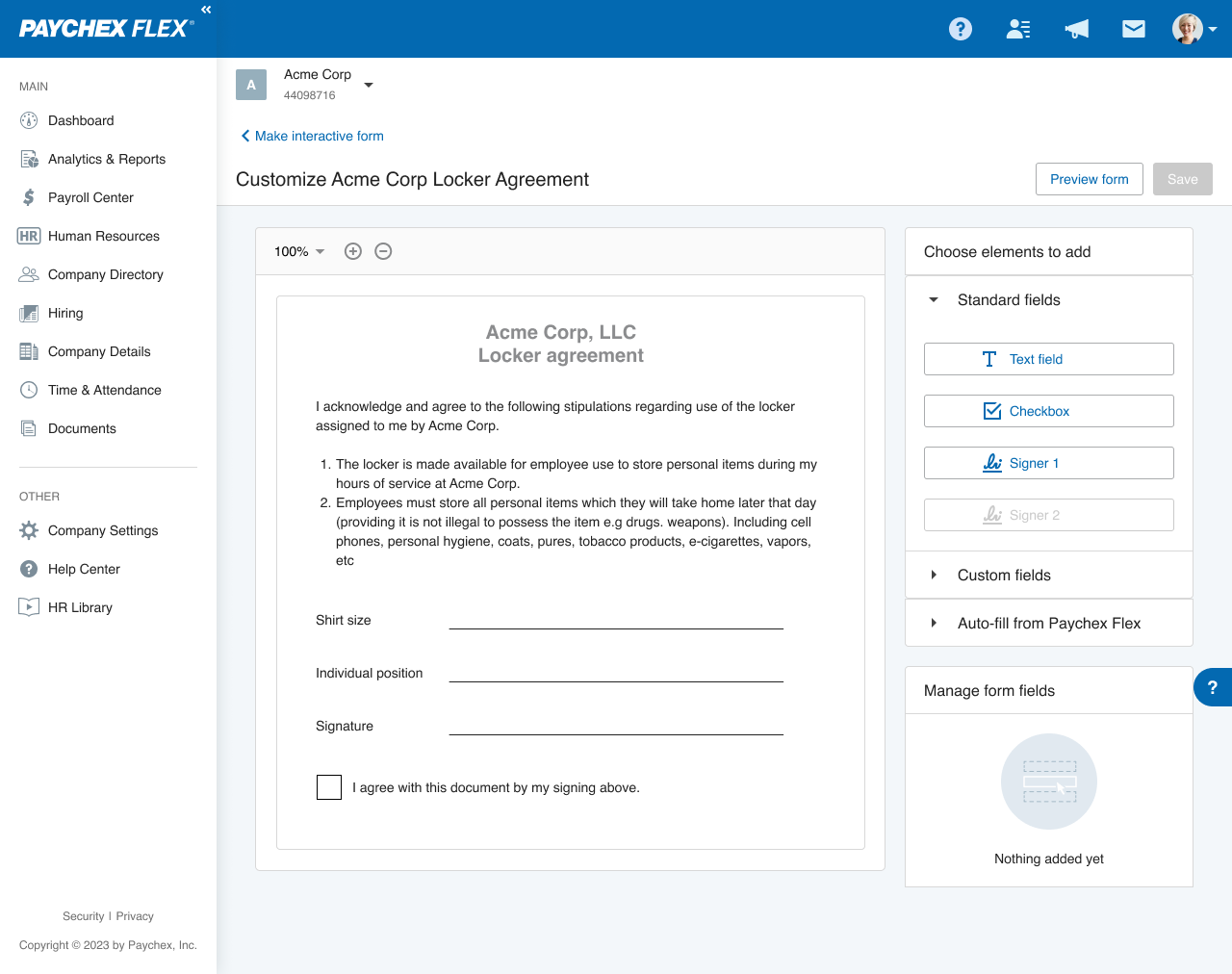
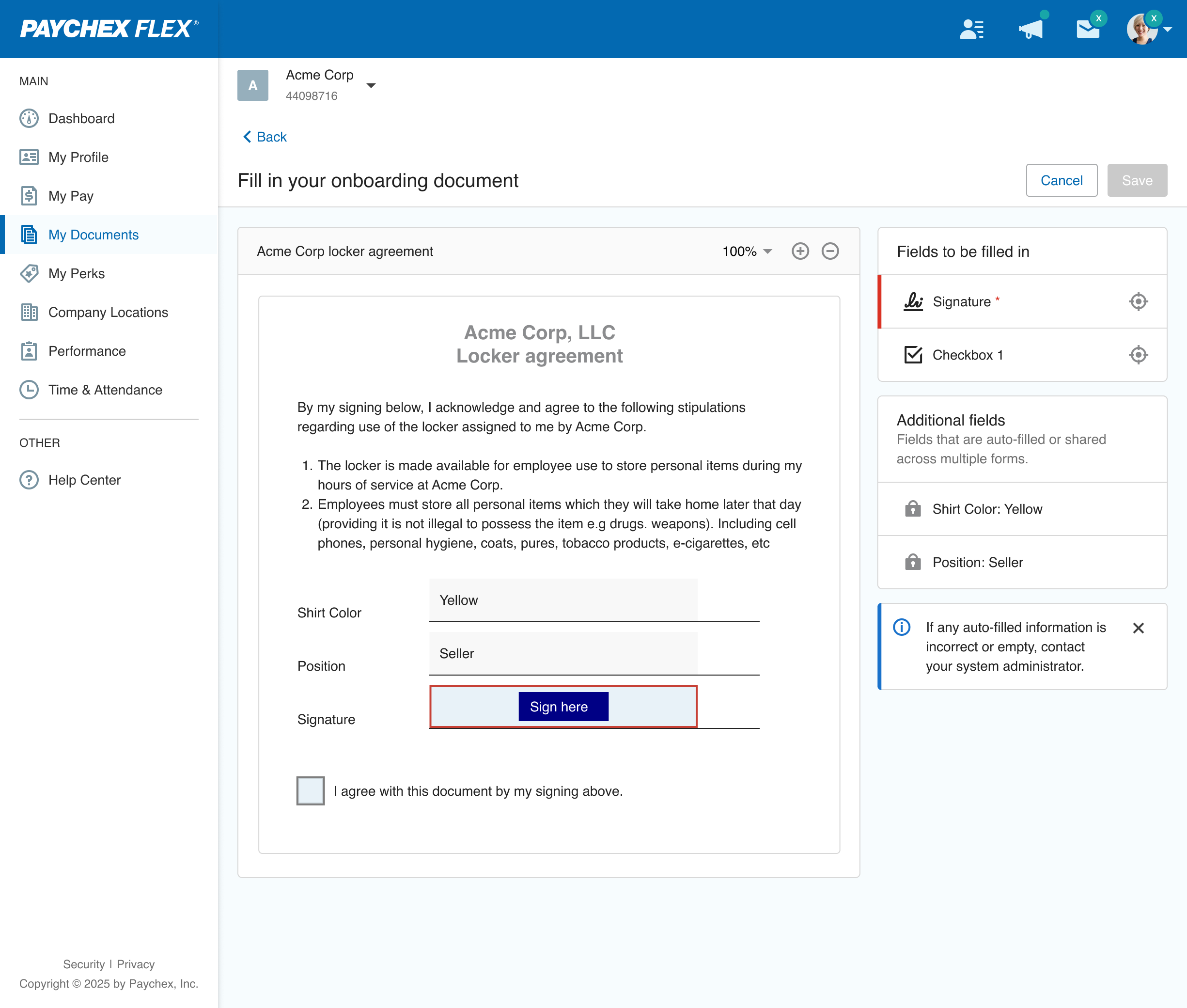
I enhanced the document and interactive-form experience, expanding customization and reducing friction in a core compliance workflow.
HR admins had limited control over document creation. Forms lacked flexibility, error messaging was unclear, and the interaction felt rigid — making it hard to build documents that matched real workflows.
A major part of the engagement was building the conversational AI layer — going beyond UI to shape how the agent thinks, communicates and behaves inside high-stakes compliance workflows.
This wasn't just about picking a tone. It was about defining how an AI agent should behave in an enterprise HR context: where responses need to be accurate, trustworthy and compliant by design. I created the agent's personality from scratch, structured how it responds to different use cases, and provided context documents as the source of truth about our services, tiers and help articles.
Shaped how the agent structures answers: length, format, escalation paths and fallback behavior, through iterative testing.
Contributed to the architecture of agent skills and context handling, including how it manages multi-turn conversations and hands off to humans.
Ran evaluation sessions to identify failure modes, bias patterns and edge cases, then iterated on prompt logic and response design.
Helped define specific agent skills: scoped capabilities the agent could invoke depending on user intent and conversation state.